Spring thaw groundwater
Foundation Seepage Cleanup in Manchester, NH
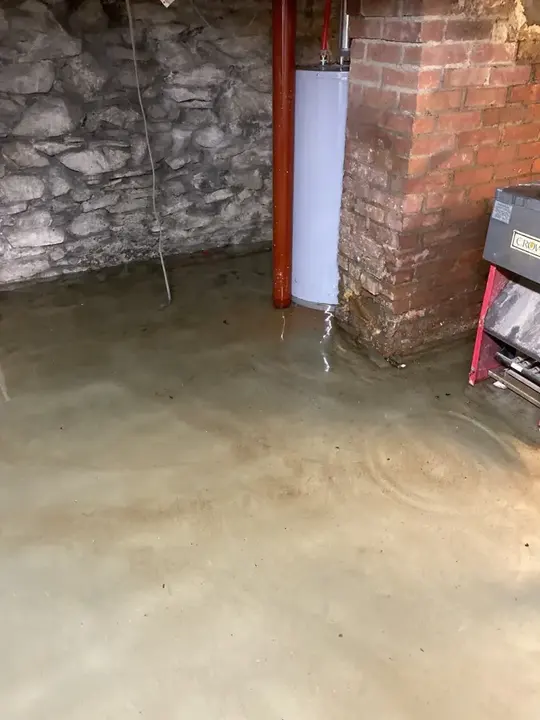
Every March and April, snowmelt over frozen ground pushes water through old stone and brick foundations. The mitigation team extracts it, dries the basement and documents where it came in.
(888) 670-6527Seepage in the basement? Call Manchester- 24/7 dispatch
- IICRC S500 drying standard
- Daily moisture readings
First steps
What to do first for foundation seepage in Manchester
- 01
Lift stored items
Get boxes and anything porous off the floor and away from the wall.
- 02
Clear gutters outside
Make sure downspouts carry water away from the foundation.
- 03
Photograph entry points
Picture the wall, the cove joint and any cracks where water comes in.
- 04
Call before it spreads
Seepage soaks finished walls slowly but steadily.
The process
How foundation seepage is handled in Manchester, NH
- 1
Find the entry
The tech who does the walkthrough maps where water enters and how far it spread.
- 2
Extract water and silt
The extraction crew clears the floor and wall base.
- 3
Remove wet porous items
Cardboard, carpet and wet wall bottoms are pulled where needed.
- 4
Dehumidify to the goal
Dehumidifiers run until walls and framing read dry.
Typical cost
What does foundation seepage cleanup cost in Manchester, NH?
In Manchester, NH, foundation seepage cleanup typically runs $800 to $5,000 or more, depending on how much water came in, whether the basement is finished, and how long the walls stayed wet.
Unfinished basement
$800 to $2,000
- Extraction and silt removal
- Dehumidification
- Moisture check
Partly finished
$2,000 to $3,500
- Wall-base flood cuts
- Carpet and pad removal
- Daily readings
Finished, long exposure
$3,500 to $5,000+
- Wider material removal
- Antimicrobial where needed
- Claim documentation
For a closer planning number, try the water damage cost calculator. The final figure comes from the walkthrough and the moisture map.
Seepage is not a sudden flood. It is groundwater that works its way through the foundation when the ground outside is saturated, and in Manchester that happens most in spring. Snow melts faster than frozen ground can absorb it, the water table rises, and ledge under much of the city pushes that water sideways into basements. Older homes with fieldstone or brick foundations take it the hardest.
How water gets through Manchester foundations
- Through the mortar joints of fieldstone and brick walls in older homes and triple-deckers
- Along the cove joint where a concrete floor meets the wall
- Through cracks and form-tie holes in poured concrete
- Up through a dirt or thin concrete floor when the water table is high
- Around pipes and old coal chutes that pass through the wall
Groundwater carries soil and minerals, so seepage is treated as Category 2. It is usually slow, which means it soaks stored items and the base of finished walls for days before anyone notices.
Cleaning up seepage water
The extraction crew pulls standing water and mud off the floor. Anything porous sitting on the floor, such as cardboard, carpet and the bottom of finished walls, is checked and often removed. Stone and brick walls hold a lot of moisture, so the drying team relies on LGR dehumidifiers and steady air movement along the wall base, with daily readings. Where a finished wall is built against the foundation, the bottom few inches may be cut to dry the cavity behind it.
Seepage versus a flood, for the claim
Many homeowners policies treat groundwater seepage differently from a burst pipe, and surface flooding usually needs separate flood coverage. Photos of where the water came in, the date and the moisture readings all belong in the file. Long-term fixes such as drainage, grading and a sump pit are separate from cleanup; see sump pump failure cleanup when the pump is the problem. The National Weather Service posts spring flood outlooks, and UNH Cooperative Extension has New Hampshire home and yard guidance.
Water showing up along the base of the wall after a thaw? Move stored items off the floor, run any dehumidifier you have, photograph the entry points and call before it reaches finished walls.
Service area
Covering Manchester and the nearby Merrimack Valley towns
The Manchester restoration team covers every ward of the city, from the North End and the Millyard to the West Side, the South End and the Lake Massabesic side.
Coverage also reaches Bedford, Goffstown, Hooksett, Auburn, Londonderry, Litchfield and Merrimack, ZIP codes 03101, 03102, 03103, 03104, 03105 and nearby.
See every neighborhood and ZIP codeRelated
Related water damage services in Manchester
Questions
Foundation Seepage Cleanup questions, answered for Manchester
Why does my basement leak only in spring?
Snowmelt over frozen ground and a high water table push groundwater against the foundation, and old mortar joints and the cove joint let it in.
Is seepage the same as a flood for insurance?
Usually not. Groundwater seepage and surface flooding are often treated differently from a sudden pipe burst. Coverage depends on your policy, so it is worth checking with your own insurer.
Can fieldstone basement walls be dried?
Yes, though slowly. Stone holds moisture, so dehumidifiers and air movement along the wall base run with daily readings until the space reaches its drying goal.
Does the restoration team waterproof the foundation?
No. Cleanup and drying are one job; drainage, grading and waterproofing are separate work by a foundation or drainage contractor.
Is seepage water dangerous?
It carries soil and minerals and is treated as Category 2. If it mixes with a floor-drain backup, it becomes Category 3.
What can I do before next spring?
Keep gutters clear, extend downspouts, slope soil away from the house and consider a sump pit with a battery backup.
24/7 dispatch
Foundation Seepage Cleanup in Manchester? Call now.
The restoration team extracts, dries to the IICRC S500 goal and documents the loss for the claim file, across the city and the nearby towns.