Drying to the standard
Structural Drying in Manchester, NH
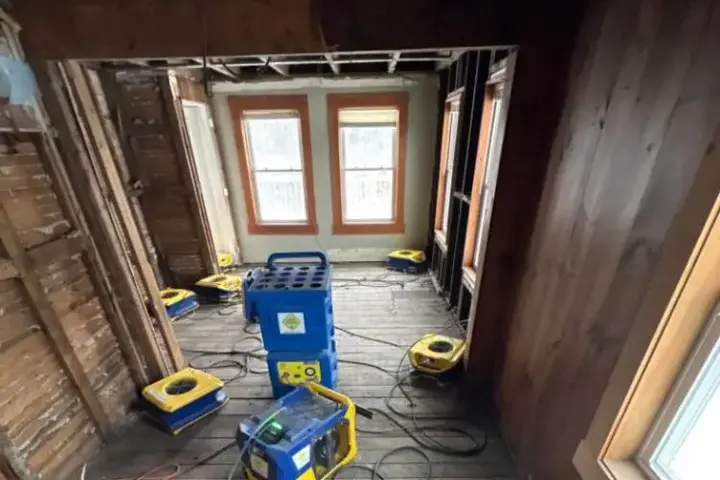
Dry to the touch is not dry. The drying team measures moisture in framing, subfloor and plaster every day and leaves the equipment until the readings match a dry reference in the same building.
(888) 670-6527Get the drying started today in Manchester- 24/7 dispatch
- IICRC S500 drying standard
- Daily moisture readings
First steps
What to do first for structural drying in Manchester
- 01
Leave equipment running
Air movers and dehumidifiers work around the clock; do not switch them off.
- 02
Keep windows closed
Unless the drying team says otherwise, outside air can slow drying.
- 03
Keep the heat steady
A normal indoor temperature helps evaporation.
- 04
Allow daily readings
Access for the daily moisture check keeps the plan on track.
The process
How structural drying is handled in Manchester, NH
- 1
Map and class
Meters and thermal imaging map moisture and set the class of loss.
- 2
Set equipment
Air movers and LGR or desiccant dehumidifiers go in at each room's load.
- 3
Read daily
Moisture and psychrometric readings are logged and the plan adjusted.
- 4
Verify dry
Equipment comes out when materials hit the drying goal.
Typical cost
What does structural drying cost in Manchester, NH?
In Manchester, NH, structural drying typically runs $1,200 to $9,000 or more, depending on the class of loss, how many rooms need equipment, how dense the materials are and how many days drying takes.
Class 1 to 2, one area
$1,200 to $3,000
- Moisture mapping
- Air movers and LGR
- Daily readings
Class 3, several rooms
$3,000 to $6,000
- Walls, ceilings and insulation
- More equipment days
- Drying logs
Class 4, plaster and hardwood
$6,000 to $9,000+
- Desiccants and drying mats
- Extended monitoring
- Claim documentation
For a closer planning number, try the water damage cost calculator. The final figure comes from the walkthrough and the moisture map.
Structural drying is the part of a water loss you do not see: pulling moisture out of framing, subfloor, plaster and hardwood after the standing water is gone. It follows the IICRC S500 standard, the industry drying standard, and it is measured, not eyeballed. A wall can feel dry on the surface while the stud behind it is still wet enough to warp, stain or grow mold.
How the drying plan is built
The tech who does the walkthrough maps every wet material with pinless and pin meters and thermal imaging, and takes a reading from a dry reference material in an unaffected part of the same building. That reference sets the drying goal. The loss is then classed by how much water there is and how porous the materials are:
- Class 1: a small area with low-porosity materials
- Class 2: a whole room, water wicked up the walls
- Class 3: water from above, ceilings, walls and insulation soaked
- Class 4: dense materials that hold water, such as hardwood, plaster, brick and stone
The class decides how many air movers and how much dehumidification each room needs.
The equipment and why it matters in Manchester
Air movers push dry air across wet surfaces so water evaporates. LGR (low grain refrigerant) dehumidifiers pull that moisture back out of the air. Class 4 materials, which are everywhere in the city's older buildings, including plaster on lath, old-growth hardwood and brick and stone foundations, often need desiccant dehumidifiers and drying mats to pull water out of dense material. In winter, closed-up houses help drying; in humid summers, dehumidification does more of the work.
Daily readings and the claim file
The drying team records moisture and psychrometric readings every day, adjusts the equipment when the numbers stall, and pulls it only when wet materials read within 2 to 4 points of the dry reference. Those logs go in the claim file alongside the photos and the moisture map. The EPA explains why materials should be dried inside 24 to 48 hours, and UNH Cooperative Extension covers indoor humidity in New Hampshire homes. Drying starts after water extraction.
Equipment comes out when the readings say dry, not on a set day. That is the difference between structural drying and running a few fans.
Service area
Covering Manchester and the nearby Merrimack Valley towns
The Manchester restoration team covers every ward of the city, from the North End and the Millyard to the West Side, the South End and the Lake Massabesic side.
Coverage also reaches Bedford, Goffstown, Hooksett, Auburn, Londonderry, Litchfield and Merrimack, ZIP codes 03101, 03102, 03103, 03104, 03105 and nearby.
See every neighborhood and ZIP codeRelated
Related water damage services in Manchester
Questions
Structural Drying questions, answered for Manchester
What is IICRC S500?
It is the industry standard for water damage restoration. It sets how losses are classified, how drying is done and how dryness is verified.
How long does structural drying take?
A contained Class 1 or 2 loss usually dries in three to five days. Hardwood, plaster and stone take longer, and the decision comes from daily readings.
Why can't I just use fans and open windows?
Fans move air but do not remove moisture, and outside air can be humid. Dehumidifiers pull water out, and meters confirm the materials are actually dry.
What is a dry reference reading?
A moisture reading from the same kind of material in an unaffected part of the building. Wet materials are dry when they read within 2 to 4 points of it.
Can plaster walls be dried in place?
Often, though plaster holds water longer than drywall and may need desiccant drying and extra days.
Why is the equipment so loud?
Air movers move a lot of air to speed evaporation. The noise lasts only until the readings reach the goal.
24/7 dispatch
Structural Drying in Manchester? Call now.
The restoration team extracts, dries to the IICRC S500 goal and documents the loss for the claim file, across the city and the nearby towns.